EV Charging Problems Don’t Start With the Charger
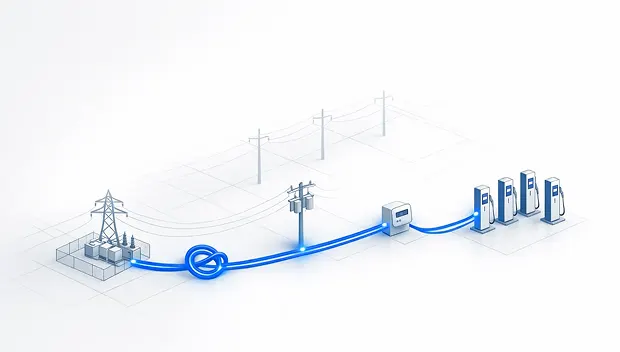
Most EV charging issues don’t start when a charger breaks. They start when electricity demand quietly exceeds what a site was designed to handle.
Property owners, fleet operators, and employers often install chargers assuming the electrical system will ‘figure it out.’ But when multiple vehicles plug in at once, unmanaged charging can quickly lead to higher bills, tripped breakers, or expensive utility upgrades.
Load management exists to prevent these problems before they happen.
What Load Management Actually Does
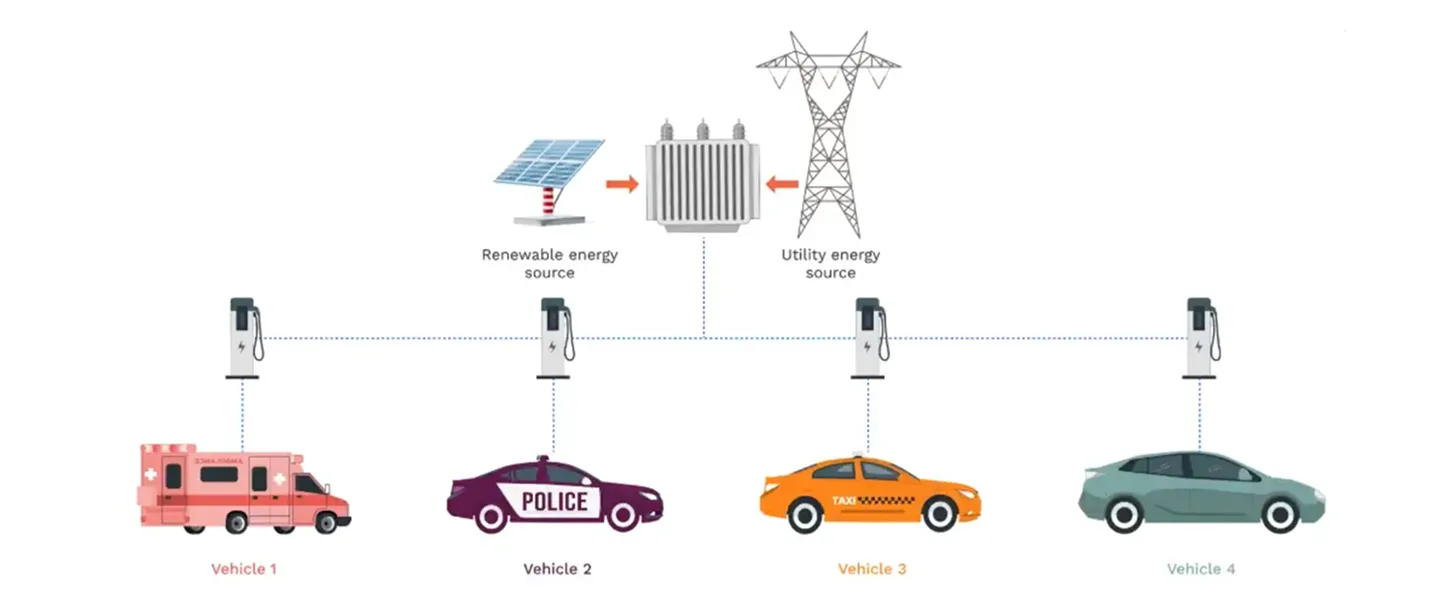
At its simplest, load management controls how much power EV chargers are allowed to use at any given moment so a site doesn’t overload or overspend.
Instead of every charging pulling maximum power whenever a vehicle plugs in, load management:
- Shares available power across chargers
- Slows charging when other building loads increase
- Keeps total site demand below a safe, predefined limit
To understand why this matters, it helps to look at situations people run into every day.
Scenario 1: ‘We Want to Add Chargers but Our Panel Is Already Full’
The Situation:
An apartment building wants to install four Level 2 chargers for residents. An electrical review shows the main panel is already close to capacity during evening hours.
Without load management:
- The site is forced to upgrade electrical service
- Costs increase significantly
- Installation timelines stretch by months
With load management:
- Chargers share available power
- Total site load never exceeds panel limits
- All four chargers are installed without upgrades
Load management turns a hard electrical limit into a flexible resource.
Scenario 2: ‘Our Power Bill Spiked After Installing Chargers’
The Situation:
A commercial properly installs EV chargers for employees and customers. Charging overlaps with peak business hours when HVAC, lighting, and equipment are already running.
Without load management:
- Multiple chargers pull power at once
- A short spike sets a new monthly demand charge
- Utility bills increase for months or even a year
With load management:
- Charger power is capped during peak building usage
- Charging slows instead of spiking
- Demand charges stay under control
This is one of the most common, and expensive, mistakes unmanaged charging creates.
Scenario 3: Fleet Vehicles All Plug In at the Same Time
The Situation:
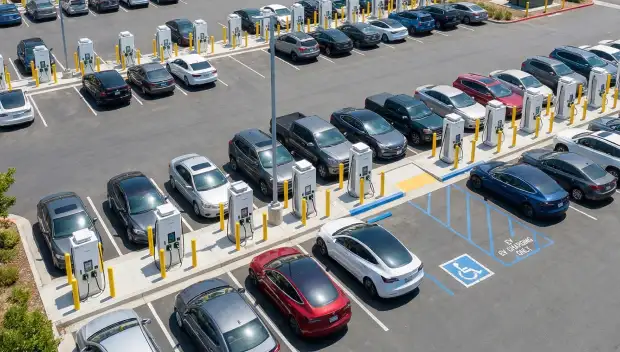
A fleet depot has vehicles returning every evening around the same time. All drivers plug in immediately to be ready for the next day.
Without load management:
- Simultaneous charging creates massive power spikes
- Electrical service must be oversized ‘just in case’
- Operating costs rise unnecessarily
With load management:
- Charging is staggered automatically
- Fleet vehicles are prioritized by schedule
- Power is distributed evenly overnight
The fleet still charges fully, just without wasting money on excess capacity.
Scenario 4: Workplace Charging Competes With Office Load
The Situation:
Employees arrive in the morning, plug in their vehicles, and start the workday. At the same time, HVAC systems ramp up and office demand peaks.
Without load management:
- Chargers and building systems compete for power
- Breakers trip or charging slows unpredictably
- Facility teams scramble to react
With load management:
- Charging adjusts dynamically as building load changes
- No interruptions to office operations
- A consistent experience for drivers
Load management keeps EV charging from becoming a facilities headache.
Why Load Management is Foundational, Not Optional
Across all these scenarios, the pattern is the same:
The problem isn’t EV charging itself, it’s uncoordinated power use.
Load management:
- Prevents surprise utility costs
- Avoids unnecessary infrastructure upgrades
- Makes it possible to add more chargers safely
- Keeps operations predictable as EV adoption grows
As sites add more chargers, unmanaged systems become harder, and more expensive, to maintain.
Build Charging That Works With Your Site, Not Against It
Before adding chargers or upgrading electrical service, it’s worth asking a simple question:
Can we use the power we already have more intelligently?
In many cases the answer is yes, with the right laid management strategy.
Learn How DynaChrg’s Load Management Works