Why Utility Timelines Catch So Many Projects Off Guard
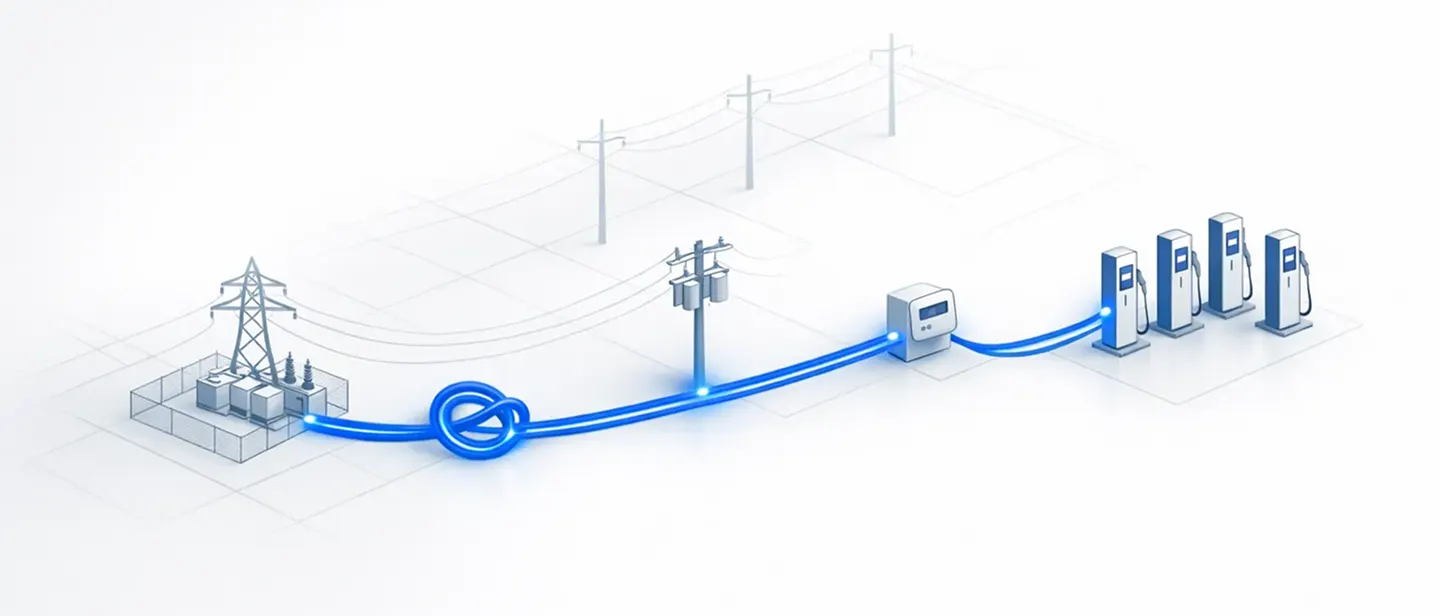
For many EV charging projects, the biggest delays don’t come from permitting, hardware procurement, or construction. They come from the utility.
Property owners and site hosts often assume that once chargers are selected and contractors are scheduled, the project is largely on track. In reality, utility coordination can introduce months, or even years, of unexpected delays if it isn’t addressed early. Understanding how utility timelines really work is critical to keeping projects on schedule and within budget.
What ‘Utility Timeline’ Actually Means
Utility timelines refer to the process required for a site to safely support additional electrical load.
This can include:
- Service reviews and load studies
- Transformer upgrades or replacements
- New service connections or feeder upgrades
- Substation capacity constraints
- Utility design approvals and construction scheduling
Each step involves coordination across multiple utility teams, and none of them move quickly without early engagement.
Why Utility Upgrades Take Longer Than Expected
Utility upgrades are complex by nature and they’re happening at unprecedented scale due to electrification.
Common reasons for delays include:
- Backlog caused by EV, solar, and battery projects
- Long lead times for transformers and switchgear
- Engineering reviews that happen in batches
- Limited utility construction crews
- Seasonal construction restrictions
Even small upgrades can take 6-12 months, while larger capacity increases can extend well beyond that.
The Cost of Waiting Too Long
Delaying utility coordination doesn’t just slow down projects, it can significantly increase costs.
Late stage surprises often lead to:
- Missed incentive or grant deadline
- Reworked site designs
- Idle construction crews
- Temporary charging solutions
- Lost revenue or operational disruption
In many cases, the utility becomes the critical path that determines when chargers can go live.
How to Stay Ahead of Utility Timelines
The most successful EV charging projects plan for utility constraints from day one.
Start With a Realistic Site Assessment
Before finalizing charger counts or power levels, evaluate:
- Existing electrical capacity
- Historical peak demand
- Future expansion needs
This informs what’s possible now and what requires utility involvement.
Click here to read more about how to make sure your site is EV ready.
Engage the Utility Early
Submitting a service request early, sometimes even before final design, is one of the best ways to surface constraints and set expectations.
Early engagement helps:
- Identify upgrade requirements
- Establish realistic timelines
- Avoid last minute redesigns
Design With Flexibility in Mind
Rather than sizing infrastructure for maximum power on day one, design systems that can scale over time.
This includes:
- Load management
- Power sharing across chargers
- Modular expansion strategies
This informs what’s possible now and what requires utility involvement.
Use Software to Reduce Upgrade Needs
Intelligent energy management can often eliminate or defer costly utility upgrades by optimizing how power is used.
By controlling charging behavior, sites can:
- Support more chargers on existing service
- Avoid triggering demand charge thresholds
- Align charging with utility constraints
When Utility Upgrades Are Unavoidable
In some cases, upgrades are necessary and planning for them is just as important.
If upgrades are required:
- Factor timelines into project milestones early
- Explore incentive programs that offset costs
- Phase deployments to keep sites operations
Clear expectations reduce risk and improve outcomes.
The Bottom Line: Utilities Set the Pace, Unless You Plan Ahead
Utility timelines aren’t predictable, they’re just often misunderstood. When site hosts plan for electrical constraints early and design charging systems with flexibility, utility coordination becomes manageable instead of disruptive.
The difference between a delayed project and a successful one often comes down to how soon utilities are brought into the conversation.
Plan Smarter, Build Faster
Before installing EV chargers, make sure your project timelines reflect the reality of utility coordination, not assumptions.