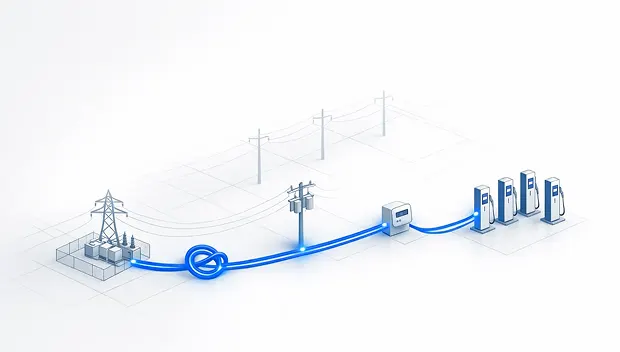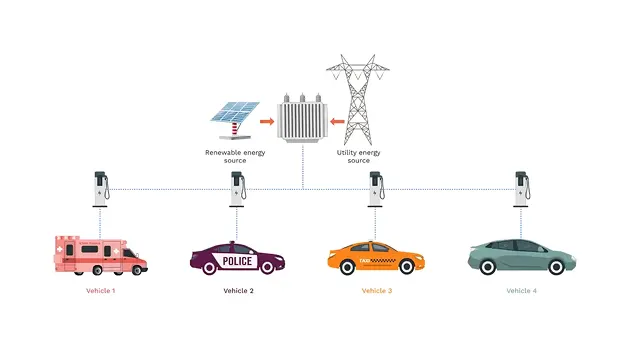
As more drivers switch to electric vehicles, many businesses, property owners, and fleet operators are installing EV chargers to meet growing demand. One topic that often causes confusion, and sometimes surprise billing, is demand charges. The concept sounds technical, but once you understand how they work you can manage costs much more effectively.
What Are Demand Charges?
When a utility bills a site, they look at two things: how much total energy you use and how much power you draw at any moment.
Utilities do not just charge for the energy you consume, they also charge for the highest level of power your site pulls at once.
Demand charges are based on the highest 15-mins power spike your site reaches during a billing cycle. Even a short surge can set your peak demand for the entire month. In many regions, that one spike can also determine your demand rate for up to twelve months, meaning an unexpected overload can lead to a full year of higher costs.
A Simple Real-World Scenario
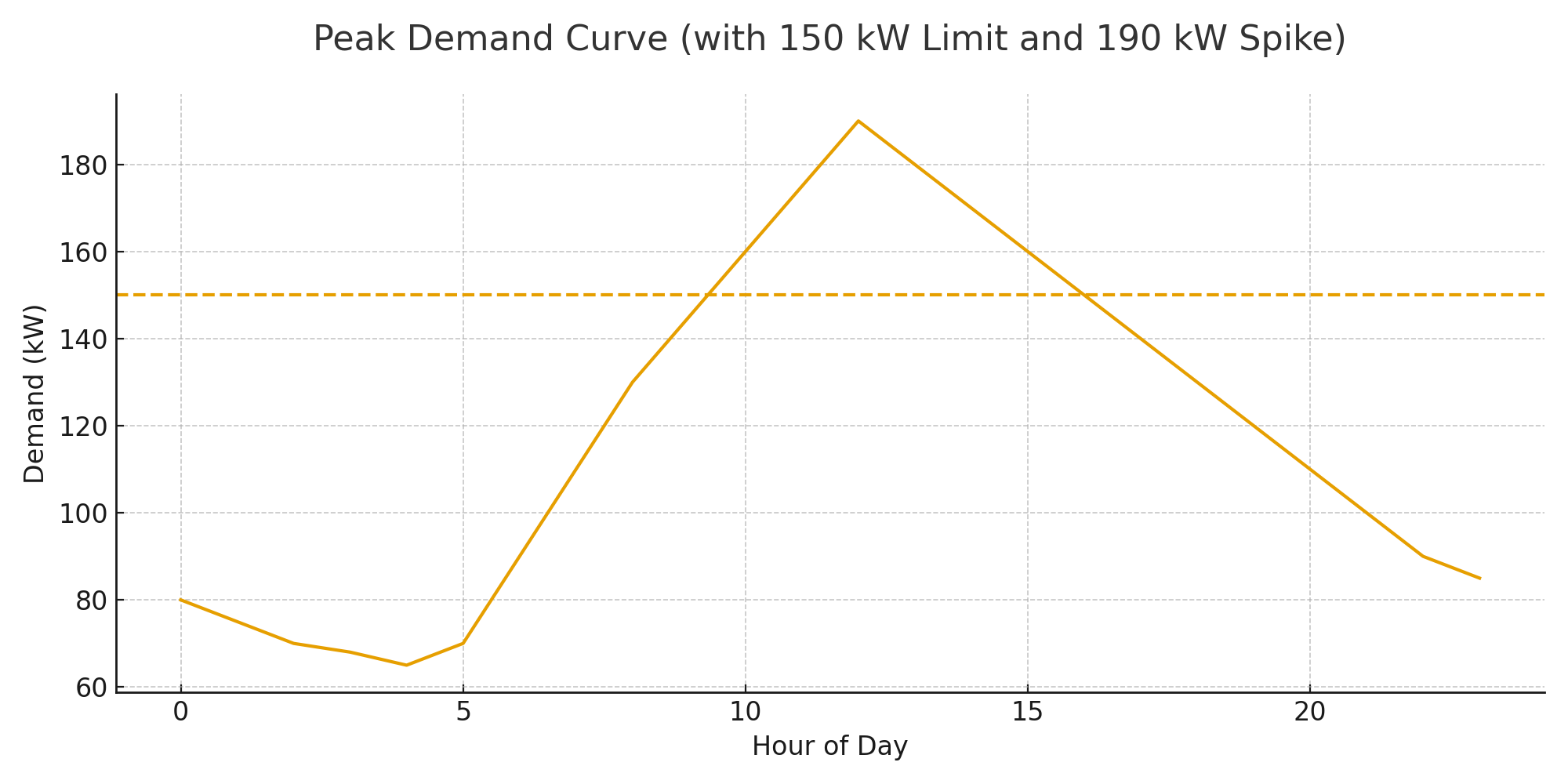
Imagine your site has a 150 kW utility capacity limit and ten Level 2 chargers, each capable of using around 19 kW. Most days only a few cars charge at a time, so the site stays well below its limit.
Then on a busy afternoon:
- All 10 chargers are in use
- Each charger draws near full power
- Total site load jumps toward 190 kW
That brief moment becomes your peak demand because your usage exceeded the 150 kW limit. The utility uses this number to calculate your demand charges for the month, and in many regions it can influence your rate for the next twelve billing cycles.
This is why site hosts are often surprised by big billing swings, even when overall energy usage hasn’t changed.
Why Demand Charges Exist?
Utilities must ensure there is enough power available the moment you need it. To do that, they build and maintain infrastructure sized to your highest potential power draw, not your average usage.
Demand charges help recover the cost of keeping that capacity ready, and they also help protect the grid during times of heavy load. This is why a short spike can be expensive — you are billed for the maximum strain your site places on the grid.
How Demand Charges Affect EV Charging Sites
EV charging naturally creates conditions where power spikes can occur, especially when several chargers activate at once. Some key factors:
Higher Power Creates Higher Demand
Level 2 chargers rarely cause spikes alone, but many used together can. Fast chargers capable of 100–350 kW can push a site to its limit almost immediately.
A Single Spike Can Be Expensive
One busy moment can set your demand charges for an entire month, and in many regions for up to a year.
Low Utilization Makes It Worse
If charging sessions are infrequent, that single demand spike is spread across fewer paid sessions, raising the cost per session.
Profitability Can Be Impacted
Retail locations may see reduced margins, fleets may face unpredictable costs, and public charging sites may take longer to break even. For some DC fast charging sites, demand charges can represent 40–60 percent of total operating costs.
How to Reduce or Avoid Demand Charges
Use Load Management
Load management distributes available power across chargers and prevents sudden spikes when multiple vehicles plug in at once.
Example:
If two cars connect to 240 kW chargers simultaneously, DynaChrg EVES can cap total site output — for example at 150 kW — to avoid triggering a peak event.
Choose Hardware That Matches Your Site
The charger type affects installation cost, charging speed, and demand impact. Different properties have different dwell times, so selecting the right hardware keeps demand under control.
Charger Types at a Glance

DynaChrg supports all major charger types and helps site hosts select hardware that fits their property’s needs, available power, and business goals.
Explore Utility Programs
Many utilities offer programs that can reduce costs, such as EV-specific tariffs, time-of-use rates, or temporary demand charge relief. These can make a meaningful difference in long-term operating expenses.
DynaChrg helps site hosts identify the best available programs and rate structures to lower costs from day one.
Add Onsite Battery Storage
Energy storage absorbs sudden spikes and releases power gradually. This reduces peak demand and stabilizes operating costs.
Battery storage is especially valuable for:
- Fleet depots
- High-volume fast-charging sites
- Properties with expensive demand rates
DynaChrg integrates with third-party storage systems to support these use cases.
Design Your Site With Demand in Mind
The best time to prevent demand charges is before installation.
Evaluate:
- Available grid capacity
- Expected charging patterns
- Tariff and rate structures
- Growth and expansion plans
DynaChrg models these factors upfront to help customers avoid predictable demand pitfalls before they occur.
Final Takeaway
Demand charges do not need to be confusing. With the right planning, hardware selection, and power management strategy, you can avoid unnecessary costs and operate a more profitable charging site.
DynaChrg’s EVES platform helps site hosts manage power intelligently, avoid peak events, reduce operating expenses, and scale confidently as electric vehicle adoption continues to grow.
If you are ready to build a charging site that delivers value without unwanted surprises, explore our hardware and software solutions today.