If you’re planning EV charging for your property, one of the first questions you’ll face is: AC or DC? While both charging types power electric vehicles, their speed, costs, and installation needs vary dramatically. Choosing the right option can maximize site value, enhance driver experience, and keep long-term operating costs under control. This guide breaks down the AC vs. DC dilemma to help you make the right decision for your site.
What Is AC Charging (Level 2)?
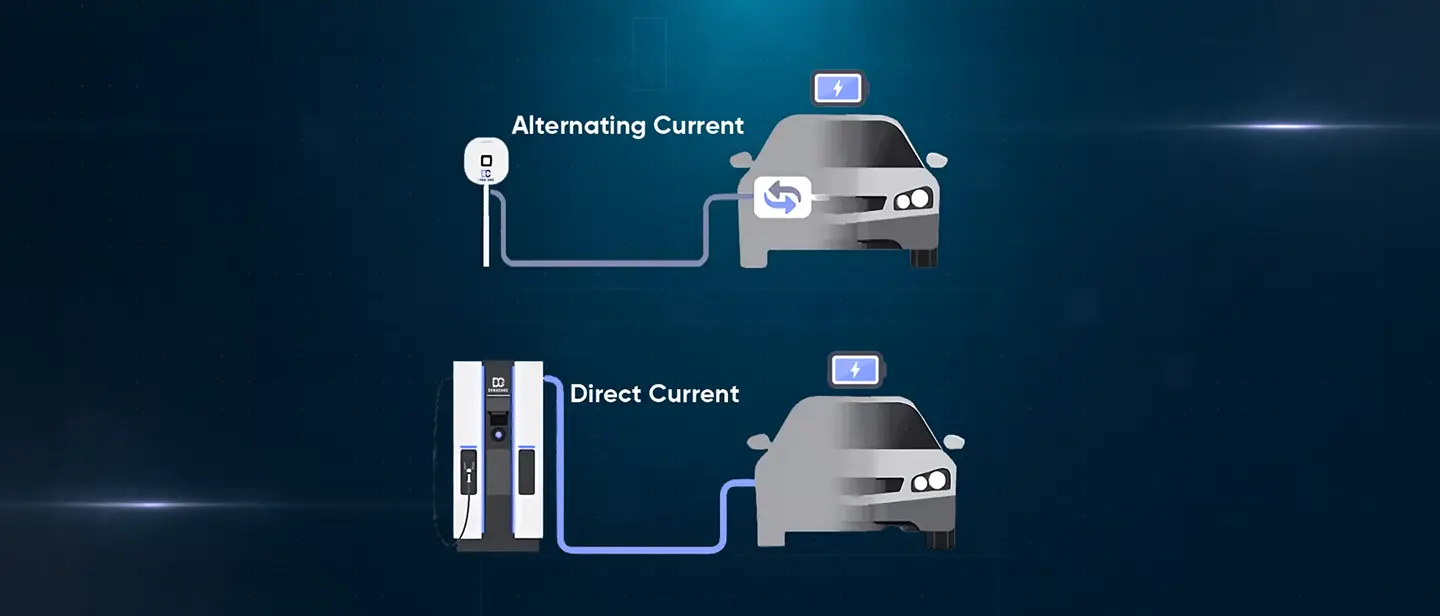
AC Chargers (often called Level 2), use alternating current. The same type of electricity that powers most buildings.
- Charging speeds: ~20-30 miles of range per hour
- Typical power: 7-19 kW
- Charging time: 4-8 hours for a full charge
- Best for: workplaces, apartments, hotels, and destinations where vehicles park for extended periods
See all of our Level 2 charging products, designed for commercial and residential properties.
What is DC Fast Charging?
DC fast chargers (DCFC) bypass the onboard charger in EVs, delivering direct current straight to the battery.
- Charging speeds: ~150-250+ miles of range per hour
- Typical power: 50-360 kW
- Charging time: 15-45 minutes for 80% charge
- Best for: retail, highway corridors, fleets, and high-turnover locations
Explore our Ultra-Fast DC hardware, for a wide range of models.
Speed & Power: A Head-to-Head Comparison

Quick takeaway: AC is cost-effective for long stays, while DC is essential for fast, high-volume charging.
Use Case Scenarios
Workplace & Multi-Family
Employees and residents leave vehicles parked for hours, making AC charging the most cost-efficient choice.
Retail & Restaurants
Shoppers need convenience and speed. DC fast chargers increase site traffic and encourage return visits.
Fleets & Municipalities
Fleet downtime equals lost revenue. DC fast charging enables rapid vehicle turnaround, while AC chargers can serve overnight depot needs.
Check out our Solutions, to see how charging can be adapted to each scenario.
Cost & Installation Differences

- AC / Level 2: Lower upfront cost, minimal utility coordination, faster permitting
- DC Fast Charging: Higher hardware and installation costs, requires utility upgrades and longer timelines, but higher ROI from faster turnover and increased site value
Our team at DynaChrg helps evaluate both options through detailed site assessments, ensuring you get the right balance of cost and performance.
Decision Guide: Which Should You Choose?
Ask yourself:
- How long will vehicles stay parked?
- Long dwell → AC
- Short dwell → DC
- What’s my power capacity and budget?
- Limited power or budget → AC
- Higher investment for speed → DC
- Who will use my chargers?
- Residents, employees → AC
- Customers, fleets → DC
The choice between AC and DC charging isn’t one-size-fits-all. It’s about matching the right technology to your site’s goals and users. By understanding speed, cost, and installation differences, you’ll set your property up for long-term success in the EV era.